Background on ICE Operations
The U.S. Immigration and Customs Enforcement (ICE) is a vital part of the U.S. Department of Homeland Security (DHS), tasked with enforcing federal immigration laws, investigating customs violations, and combating transnational crime. ICE’s operations often include arresting individuals who are in the country illegally, conducting investigations into human trafficking, drug smuggling, and cybercrimes, and ensuring that individuals comply with immigration laws.
ICE has faced increasing scrutiny over the years, with many arguing that its methods can be overly aggressive. The debate around ICE operations has become even more polarized in recent years, particularly with the growth of sanctuary cities and states that refuse to cooperate with federal immigration enforcement. Some argue that ICE’s approach is necessary to maintain law and order, while others believe that the agency’s tactics undermine human rights and exacerbate the struggles of marginalized communities.
In response to the actions of ICE, various state and local governments have begun taking a stand. Some have passed legislation that directly or indirectly limits cooperation with federal authorities. These actions have been framed as efforts to protect residents, particularly undocumented immigrants, from what they perceive as aggressive and, in some cases, discriminatory immigration enforcement.

State vs. Federal Authority in Immigration
One of the most contentious aspects of this debate is the tension between state and federal authorities. The U.S. Constitution gives the federal government the authority to regulate immigration, and ICE, as part of the DHS, acts on behalf of the federal government in enforcing immigration laws.
However, the Tenth Amendment of the U.S. Constitution reserves certain powers to the states. This has led to a complex legal battle between state rights and federal control over immigration enforcement. Some states argue that they should have the right to refuse cooperation with federal authorities, citing their ability to regulate their own law enforcement priorities and ensure the safety and well-being of their residents.
In contrast, the federal government contends that immigration enforcement is a national issue and that any obstruction of ICE operations interferes with federal law. This conflict between state and federal authority is at the heart of many legal challenges surrounding sanctuary cities and states, and it is further complicated by the political dynamics at play.
Legal Implications of Obstruction
The recent warning from the Department of Justice (DOJ) regarding obstruction in immigration enforcement raises significant legal questions. Federal officials have warned that obstructing or attempting to arrest immigration agents while they are carrying out their duties could trigger criminal prosecutions.
The legal definition of obstruction of justice includes actions that impede, hinder, or delay the work of law enforcement. This includes actions such as resisting arrest, interfering with an investigation, or impeding the ability of officers to carry out their lawful duties. When it comes to immigration enforcement, the DOJ’s warning suggests that state officials who block ICE operations could face legal consequences for hindering federal authority.
This creates a unique situation where state leaders, who may have passed laws limiting cooperation with ICE, could find themselves facing federal charges for obstruction. Governors and other officials who resist federal immigration efforts could potentially be prosecuted if their actions are deemed to interfere with the work of federal agents.

Political and Public Response
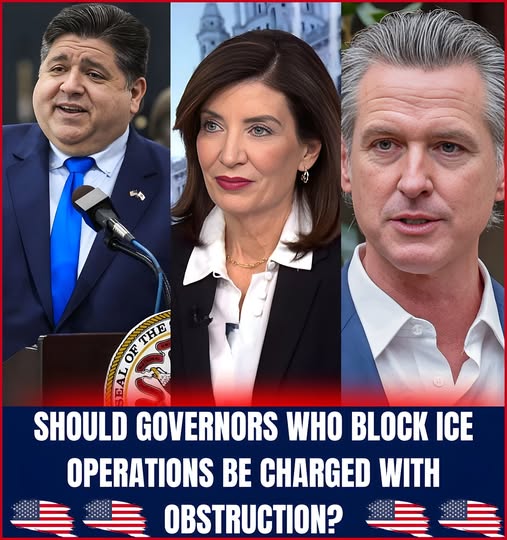
The debate over state and federal cooperation with ICE is deeply political, with differing views largely divided along party lines. Many Democratic-led states and cities have been at the forefront of limiting ICE’s operations within their jurisdictions. Governors like Gavin Newsom of California, J.B. Pritzker of Illinois, and Kathy Hochul of New York have expressed opposition to certain ICE practices, calling for reforms in the immigration system.
Opponents of this approach argue that such policies undermine the rule of law and encourage illegal immigration. They contend that by obstructing ICE, these governors and local officials are prioritizing the interests of undocumented immigrants over the safety and security of law-abiding citizens. On the other hand, supporters of sanctuary policies argue that the federal government’s approach to immigration enforcement is too harsh and that local governments should have the autonomy to protect their residents from overzealous federal agents.
This division is evident in the public’s response as well. Immigrant rights groups and civil liberties organizations generally support efforts to limit ICE’s power, arguing that the agency has been responsible for separating families and causing unnecessary suffering among vulnerable communities. Conversely, pro-enforcement groups, often including law enforcement unions and conservative policymakers, argue that states should not be allowed to block ICE operations because doing so undermines national security and immigration law.
Potential Consequences for Governors
For governors who choose to block or obstruct ICE operations, the consequences could be severe, both legally and politically. From a legal standpoint, if federal officials determine that a governor or state official has deliberately obstructed ICE’s work, they could face charges of obstruction of justice. While the likelihood of such prosecutions remains to be seen, the DOJ’s warning indicates that the government is prepared to take legal action if necessary.
Politically, governors who block ICE operations may face backlash from their constituents, particularly those who view immigration enforcement as essential to public safety. These leaders might also face legal challenges from other states or federal authorities, potentially leading to protracted legal battles. Additionally, their stance on immigration could become a key issue in future elections, especially in swing states or states with large immigrant populations.

Debates on Immigration Reform
The debate over ICE operations and obstruction cannot be fully understood without considering the broader context of immigration reform. Immigration policy in the U.S. is a contentious issue, with significant disagreement over how to balance the need for secure borders with the desire for humane treatment of immigrants.
While there is widespread agreement that the immigration system is broken, opinions diverge on how to fix it. Some advocate for comprehensive immigration reform that provides a path to citizenship for undocumented immigrants, while others argue for stricter enforcement and the deportation of individuals living in the country illegally.
This debate has reached a boiling point in recent years, particularly as the Trump administration’s “zero tolerance” policy and its controversial family separation practices raised the stakes for immigration policy. The Biden administration has promised to take a more compassionate approach to immigration, but efforts to pass meaningful reform have stalled in Congress.
The question of how to balance immigration enforcement with compassion for immigrants remains unresolved. The tension between state and federal power, along with the legal implications of obstructing ICE operations, highlights the need for a broader, more cohesive approach to immigration policy.
Conclusion: The Future of Immigration Enforcement in America
As the DOJ’s warning on obstruction looms over the debate, the future of immigration enforcement in the U.S. remains uncertain. The question of whether governors who block ICE operations should be charged with obstruction of justice is just one part of a much larger discussion on the role of law enforcement in immigration issues.
While some governors and local officials have taken a firm stance against ICE, it is clear that the legal and political consequences of these actions will continue to unfold in the coming years. For now, the conflict between state and federal immigration policies remains one of the most contentious issues in American politics.
In the absence of comprehensive immigration reform, the question of how best to enforce immigration laws while protecting the rights and dignity of individuals will continue to challenge policymakers. The balance between security and compassion, law enforcement and human rights, will be central to this ongoing debate.