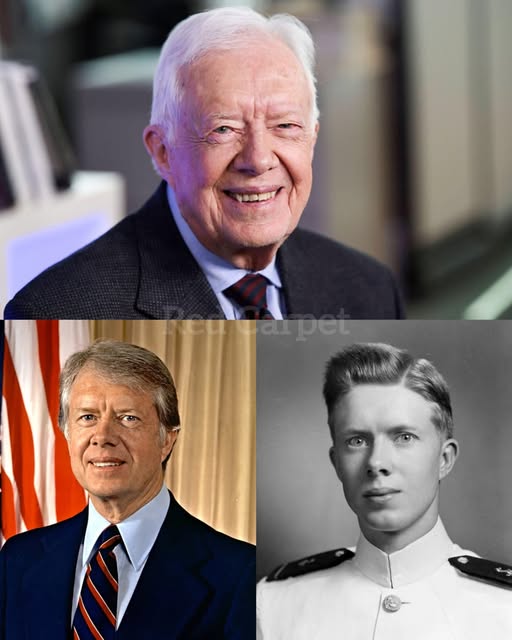
In the high-stakes world of global politics, where ambition, power, and cunning often take precedence, Jimmy Carter stands as a rare example of humility, decency, and faith in the human spirit. While many of his peers were defined by their fierce political maneuvering, Carter’s defining strength was not in grandiose speeches or forceful actions. Instead, it was his quiet, steadfast belief in human goodness and the power of faith that allowed him to shape a legacy far beyond the political theater.
Born in 1924 in Plains, Georgia, Jimmy Carter was grounded in the simple values of his small-town upbringing. He was a peanut farmer first, a farmer whose roots were firmly planted in the soil, who believed in the value of hard work and the importance of integrity. This unpretentious start in life, combined with his deep faith, would shape Carter’s approach to the presidency and his post-presidential life. He did not see the presidency as a tool for personal gain or power but as a calling to serve others, to bring healing and peace wherever he could.
While his presidency was marked by significant challenges—ranging from inflation and the oil crisis to the Iran hostage situation—Carter’s greatest legacy was not his ability to navigate these crises with brute political force but his unwavering belief in the possibility of peace. The pivotal moment in his presidency came in 1978, with the Camp David Accords—an achievement that demonstrated his ability to take on complex global issues with faith and diplomacy, rather than political muscle.
The Road to Camp David: Faith Over Politics
In August 1978, the White House became the stage for one of the most remarkable diplomatic achievements in modern history. President Carter, facing a fractured world where Cold War tensions, rising nationalism, and ancient rivalries defined much of the global landscape, invited Egyptian President Anwar Sadat and Israeli Prime Minister Menachem Begin to negotiate a peace treaty. The stakes were high: a lasting peace between Egypt and Israel could change the course of history in the Middle East, but the animosities between the two nations were deep-seated, and the political climate was harsh.
Carter was no stranger to difficult negotiations, but what made this effort unique was his approach—quiet, persistent, and deeply rooted in his faith. On the first day of the Camp David talks, as the two leaders arrived, it seemed nearly impossible to broker any agreement. The men, both hardened by years of conflict, seemed to be at an impasse. The talks quickly degenerated into shouting matches, walkouts, and moments of despair. Carter’s aides urged him to abandon the efforts, but he refused. Instead, he took to writing personal letters by hand to Sadat and Begin, urging them to remember their families, their faith, and the future generations that would be impacted by their decisions.
In an environment where time was running out, Carter found solace in the Maryland woods, walking alone each night, praying for guidance. He understood that he was not simply negotiating over land or politics—he was trying to help two men, both of whom had lost children to war, reconcile their grief with their political reality. In the face of such seemingly insurmountable obstacles, Carter believed that peace was possible. His faith—both in the process and in the goodness of people—was his strength.

The Camp David Accords: A Quiet Victory
When, on September 17, 1978, the Camp David Accords were signed, the world saw the result of Carter’s quiet persistence. The accords were a historic achievement that brought Egypt and Israel to the negotiating table, marking the first peace agreement between Israel and an Arab country. But when Carter looked at the cameras that captured the moment of victory, his expression was not one of triumph or satisfaction. Instead, it was one of exhaustion, relief, and a deep sense of humility.
“We must dare to believe,” Carter said softly at the signing of the accords. “That peace is possible.” He knew that while this treaty would not end all conflict, it could save countless lives by offering hope to a region long mired in violence. Carter’s ability to bring both leaders to the table was not due to political maneuvering or tactical genius—it was his willingness to listen, to empathize, and to trust in the human capacity for goodness.
The Camp David Accords became a model for diplomacy, but Carter’s approach was also what made this achievement so unique. His quiet faith in humanity, in people’s capacity for change, was at the heart of the breakthrough. In a world where political games and ruthless negotiation tactics often dominate, Carter’s gentle conviction proved that diplomacy could be grounded in compassion, understanding, and the belief that we are all capable of transcending our divisions.
Facing Challenges: The Iran Hostage Crisis and Economic Turmoil
Despite the success of Camp David, Carter’s presidency was not without its difficulties. Throughout the late 1970s, he faced growing unrest both at home and abroad. Domestically, the United States struggled with an economic crisis marked by rampant inflation, an energy crisis, and high unemployment. Internationally, the Iran Hostage Crisis, which began in 1979, became a political and diplomatic quagmire that would ultimately define Carter’s final years in office.
The Iran Hostage Crisis, in which 52 American diplomats and citizens were taken hostage by militants in Tehran, tested Carter’s patience, resolve, and faith. Despite tireless diplomatic efforts, the hostages remained in captivity for 444 days, and Carter’s approval ratings plummeted. Throughout the ordeal, Carter refused to abandon the hostages or compromise on his values, even as the political pressure mounted. His commitment to human rights and his belief in moral leadership were central to his actions.
Though he faced mounting political pressure and dwindling support, Carter remained steadfast. His approval ratings dropped to a low of 28 percent, but his character never wavered. “I’d rather lose the presidency than my soul,” he famously said. It was a statement that defined his presidency—his belief that integrity, not popularity, was the measure of a man. This quiet resilience in the face of adversity became Carter’s most enduring trait.
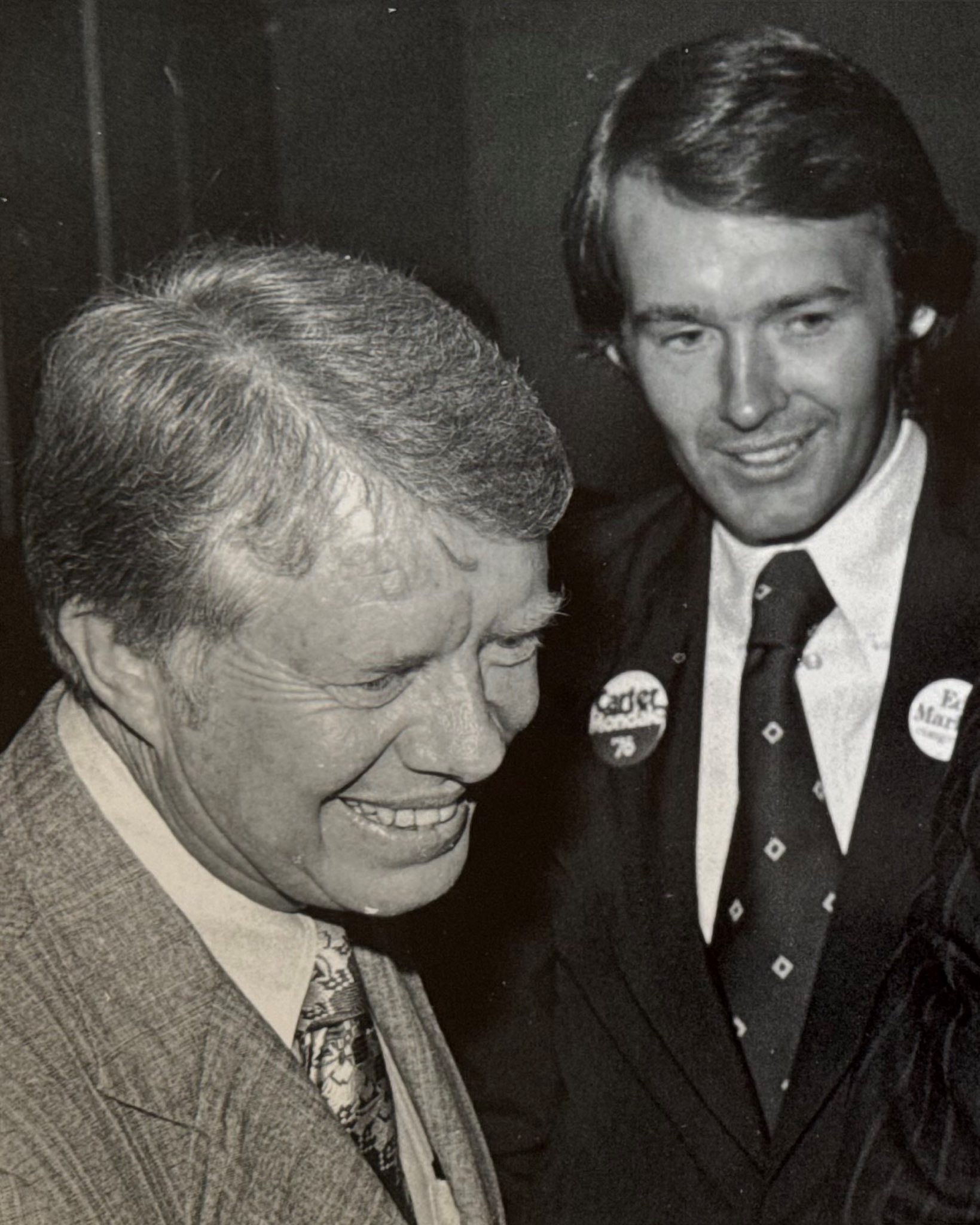
A Life of Service: From the White House to Habitat for Humanity
After leaving office in 1981, many former presidents turned to wealth, political influence, or personal pursuits to find redemption. But Carter took a different path. He found his redemption in service, spending the years following his presidency with Habitat for Humanity, a non-profit organization dedicated to building homes for those in need. Carter’s tireless work with Habitat for Humanity was a continuation of the values he had espoused during his presidency—service to others, humility, and a deep belief in the goodness of humanity.
Carter’s life after the presidency has been defined by his commitment to social justice, human rights, and peace. When he was diagnosed with brain cancer in 2015, he faced the news with the same grace and calm that had defined his presidency. “I’m perfectly at ease with whatever comes,” he told reporters, demonstrating the quiet strength that had carried him through so many challenges.
Despite the setbacks and hardships, Carter’s post-presidential years have been marked by a deep sense of fulfillment and purpose. He has traveled the world, championing causes related to democracy, human rights, and global health. In 2002, he was awarded the Nobel Peace Prize for his work in advocating for peaceful conflict resolution and human rights. And in 2017, Carter was honored with an honorary Academy Award for his lifetime of service and humanitarian efforts.
Legacy: A Leader of Integrity and Faith
Jimmy Carter’s legacy is not one of flashy triumphs or political dominance. It is a legacy of quiet strength, humility, and a profound belief in the goodness of people. In a world that often values power and ambition over integrity and kindness, Carter stands as a reminder that true leadership lies in empathy, compassion, and the willingness to serve others. His greatest victory was not the Camp David Accords, the Nobel Peace Prize, or any other accolade—it was his commitment to doing what was right, no matter the cost.
In a time of global uncertainty and political turmoil, Jimmy Carter’s life offers a powerful message: that the greatest leaders are not those who seek power, but those who use their influence to lift others up. His legacy shows that when we lead with faith in humanity, when we are guided by our moral compass rather than the winds of political expediency, we can achieve greatness—not through dominance, but through humility, compassion, and the unshakable belief that peace is possible.
In the end, Jimmy Carter’s greatest achievement was not in the treaties he brokered or the awards he received, but in proving that goodness—quiet, persistent, and unglamorous—can change the world.